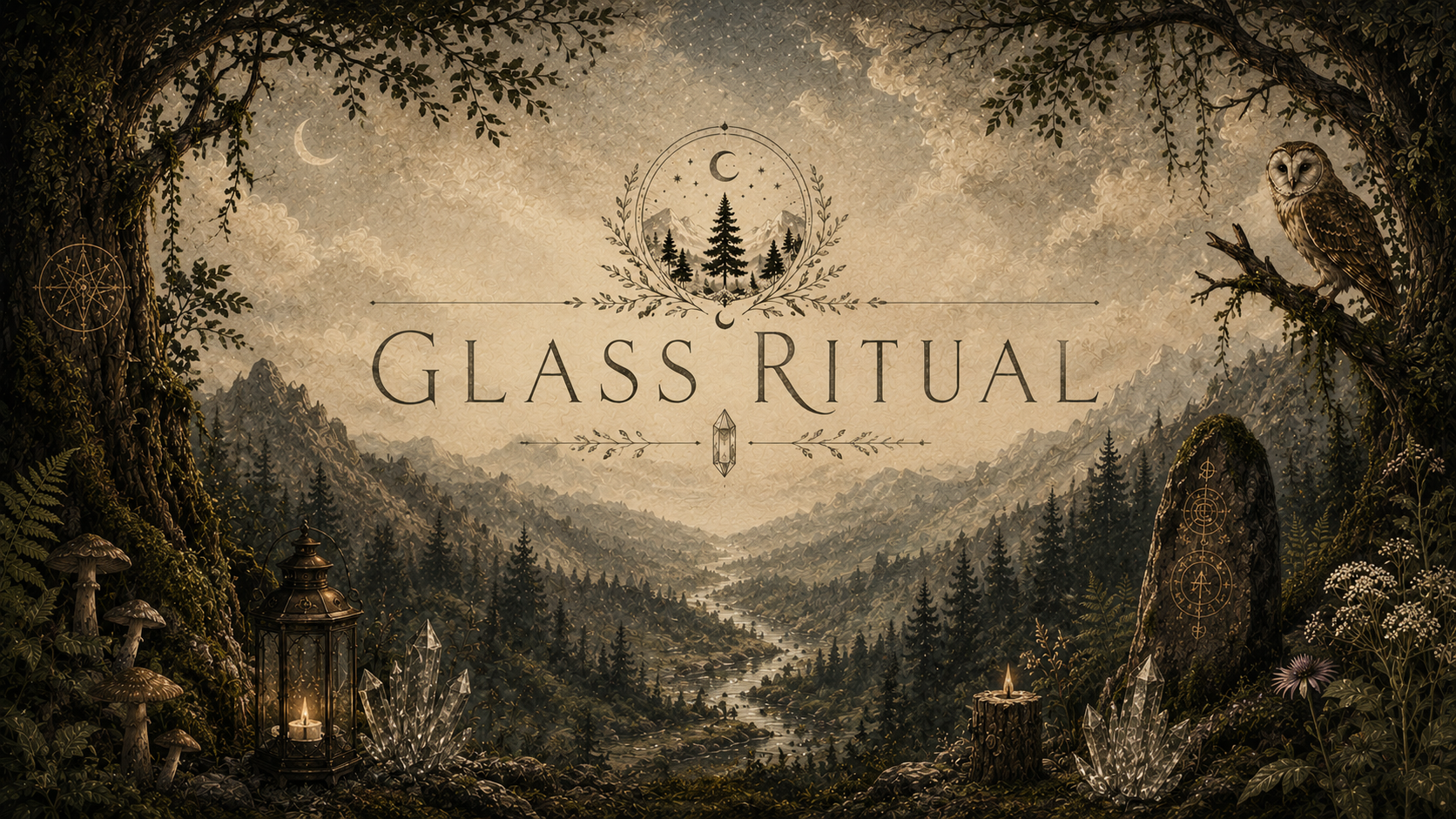
Nestled deep in the ancient folds of the West Virginia mountains, Glass Ritual is more than a retreat—it is a living sanctuary for mystic believers, naturalists, and seekers of the unseen. Hidden among towering hemlocks and moss‑draped stones, the community exists in quiet harmony with the land, guided by the belief that nature is not merely a backdrop, but a conscious force that speaks in wind, water, and shadow.
Those who gather here—musicians, wanderers, herbalists, storytellers—form a tight-knit circle bound by reverence for the Earth’s ancient rhythms. They rise with the sun, sleep beneath starlit skies, and share their days tending gardens, walking forest trails, and listening for the subtle messages carried by the mountain air. At night, the community gathers around great campfires, where flames crackle like whispered prophecies and the forest leans in to listen. Glass Ritual honors the sacred pulse of nature, the language of stone and stream, and the healing power of communal song. Music is their offering, their prayer, their way of weaving themselves into the living tapestry of the land. Every gathering becomes a ceremony—voices rising in harmony, drums echoing through the trees, flutes and strings blending with the calls of owls and the rustle of leaves. Each Glass Ritual album is a ceremonial recording, captured live beneath the open sky. No two albums sound alike, because no two nights in the mountains are ever the same. The tracks are shaped by the people who arrive—forest dwellers, fire tenders, dreamers, drifters, and those who simply feel called to the circle. Some stay for a season, some for a lifetime, but all leave their imprint on the music. Every track is a ritual. From whispered chants carried on the wind to thunderous communal hymns that shake the branches overhead, Glass Ritual albums embody the cycles of the natural world—birth, decay, renewal, and the eternal dance between light and shadow. Their music is not performed; it is summoned, shaped by the land itself. Glass Ritual is a place where the veil thins, where the forest breathes with you, and where every song becomes a doorway into something older, deeper, and beautifully wild.
Every lyric a spell.
Every harmony a thread in the endless weave of Earth’s story.
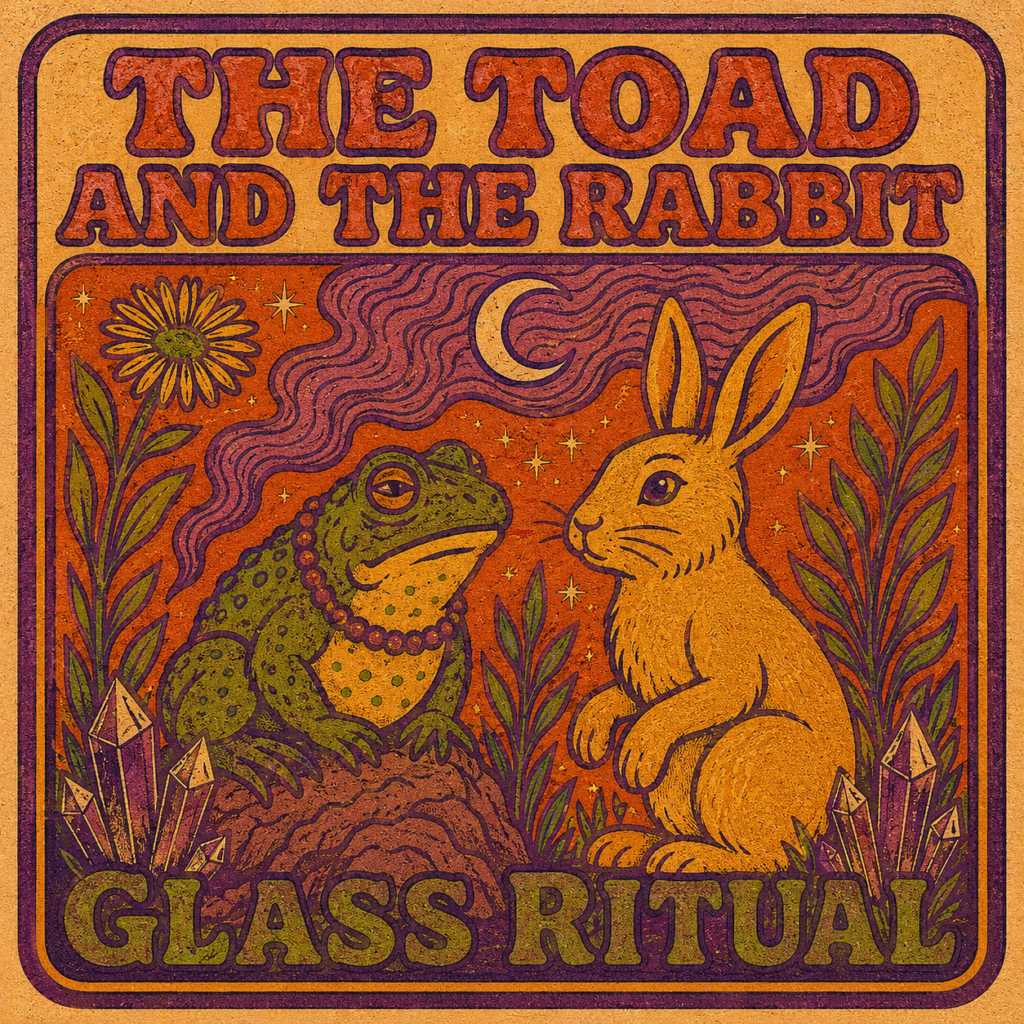
In The Toad and the Rabbit, Glass Ritual delivers its most immersive and myth‑laden work to date, a fireside fable carved straight from the moss‑covered heart of the West Virginia mountains. Recorded beneath starlit canopies and crackling campfires, the album unfolds like a living legend: the grounded, memory‑laden Toad and the quicksilver, moon‑chasing Rabbit circling each other in a dance of instinct, fate, and transformation. The collective’s signature blend of whispered invocations, communal harmonies, and nature‑soaked instrumentation turns the story into something elemental, a ritual captured in sound rather than a traditional record.
What makes the album resonate is the unmistakable presence of the community itself. Forest dwellers, fire tenders, dreamers, and drifters all lend their voices, creating a tapestry that feels ancient, breathing, and deeply human. Every track hums with the pulse of the land, echoing the cycles of birth, decay, and renewal that define the Glass Ritual ethos. The Toad and the Rabbit isn’t just listened to, it’s entered, like a clearing in the woods where myth and music blur into one living, glowing moment.
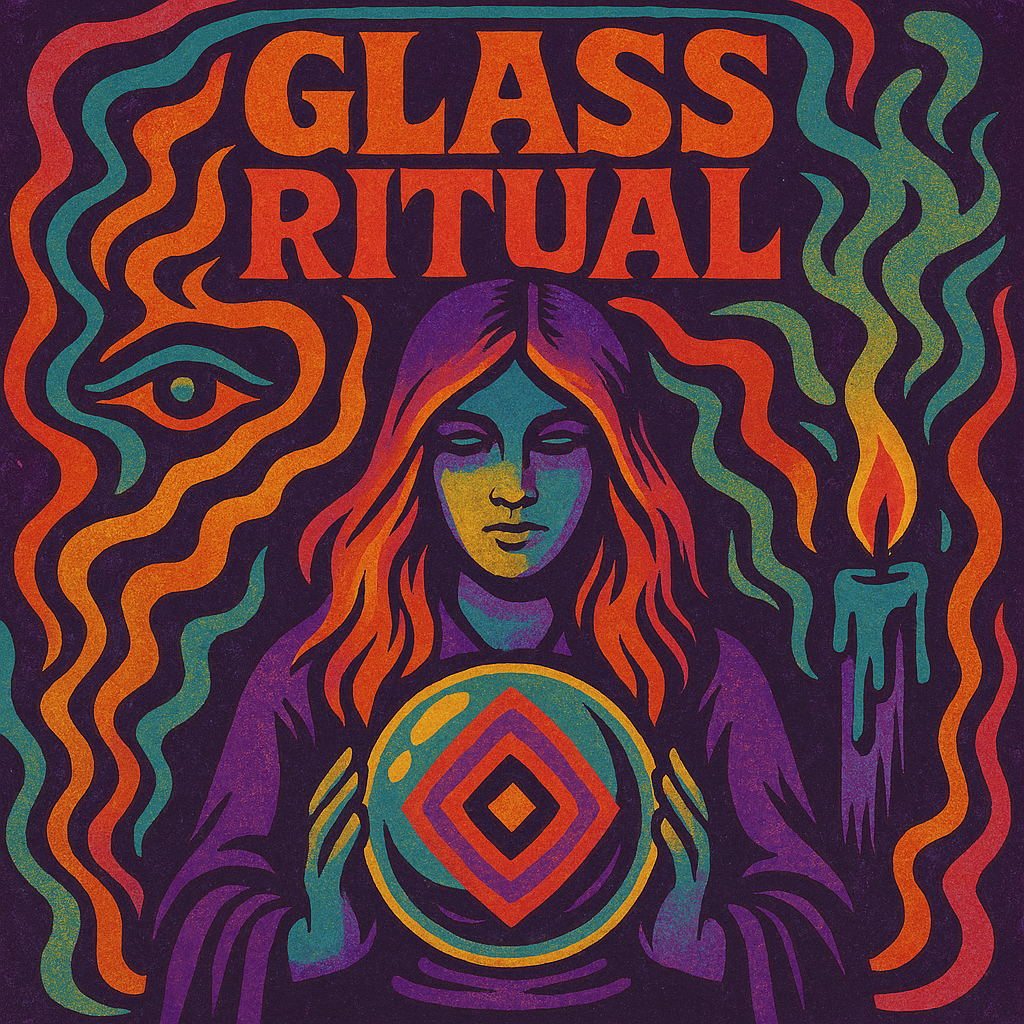
Glass Ritual’s self‑titled debut album feels less like the beginning of a musical project and more like the discovery of a hidden world. Recorded deep in the West Virginia mountains, where moss softens every footstep and the night sky hangs low enough to touch, the album captures the raw essence of the community’s earliest gatherings. You can hear the roots of their mythos forming in real time — the whispered chants, the communal harmonies, the crackle of firewood, and the unmistakable sense that something ancient is being awakened. These songs aren’t arranged so much as unearthed, pulled from the soil and shaped by the breath of the people who live closest to the land.